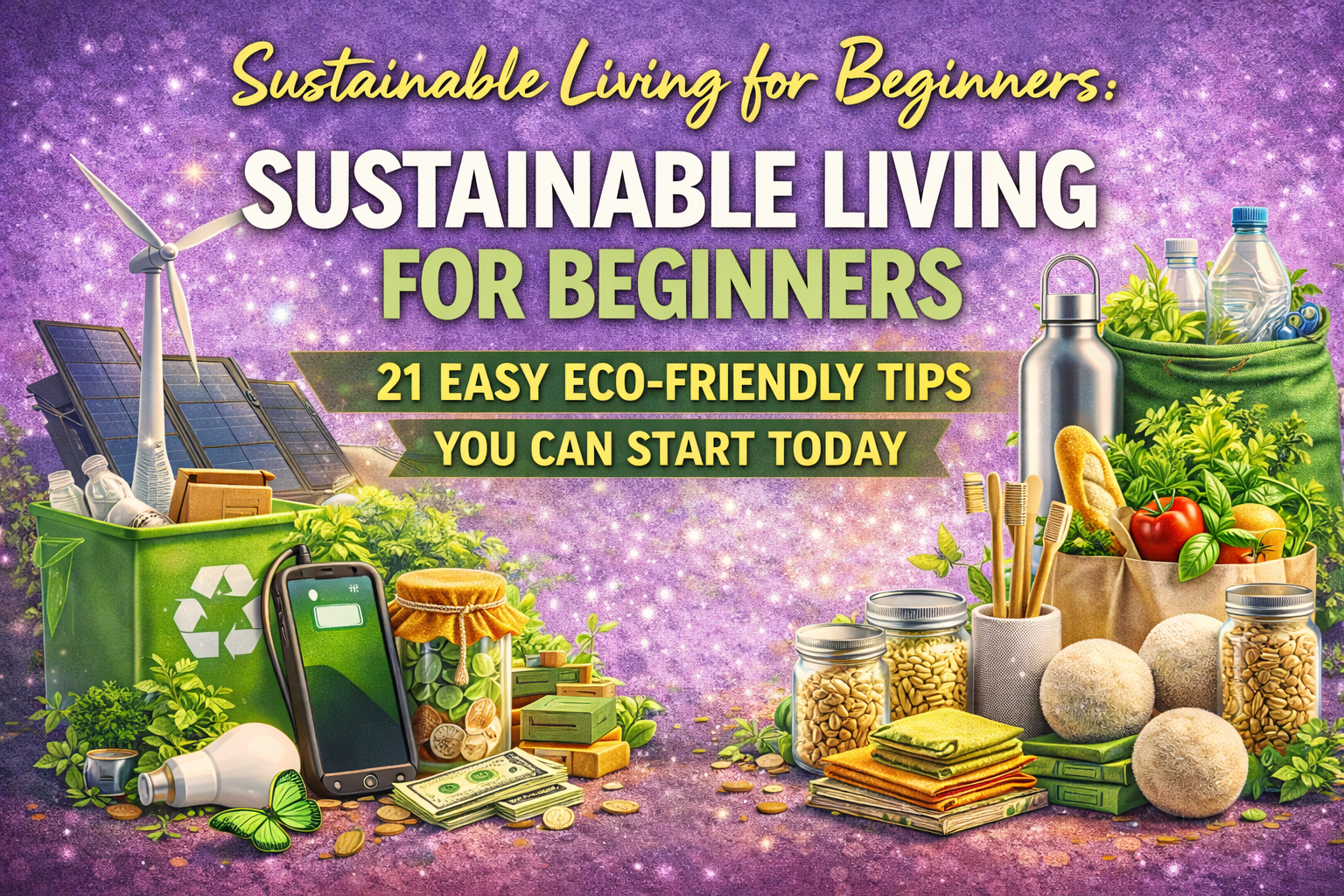
Sustainable Living for Beginners: 21 Easy Eco-Friendly Tips You Can Start Today
Introduction
Sustainable living is no longer just a trend—it’s a necessity. With rising environmental concerns, more people are looking for ways to reduce their carbon footprint and live a greener, more conscious lifestyle. The good news? You don’t need to overhaul your entire life overnight.
This beginner-friendly guide will walk you through 21 simple and practical eco-friendly tips you can start today. Whether you’re in the UK or anywhere else, these small changes can make a big difference over time.
🌍 What is Sustainable Living?
Sustainable living means making choices that reduce your impact on the environment. It involves:
- Minimising waste
- Conserving natural resources
- Supporting eco-friendly products
- Reducing carbon emissions
The goal is to create a balance between your lifestyle and the planet’s health.
🌿 Why Start Sustainable Living?
Here’s why it matters:
- Helps combat climate change
- Reduces pollution
- Saves money in the long run
- Improves personal health
- Protects future generations
✅ 21 Easy Eco-Friendly Tips for Beginners
🛍️ 1. Use Reusable Shopping Bags
Plastic bags are one of the biggest pollutants. Switch to reusable cloth or jute bags when shopping.
💧 2. Carry a Reusable Water Bottle
Avoid single-use plastic bottles by investing in a reusable one.
☕ 3. Switch to Reusable Coffee Cups
Disposable coffee cups are rarely recycled. A reusable cup is a simple eco-upgrade.
🧴 4. Choose Eco-Friendly Cleaning Products
Opt for natural, non-toxic cleaning solutions that are safe for your home and the environment.
🧻 5. Reduce Paper Towel Usage
Use washable cloth towels instead of disposable paper towels.
🛒 6. Buy in Bulk
Purchasing items in bulk reduces packaging waste and often saves money.
🥦 7. Use Reusable Produce Bags
Avoid plastic produce bags by bringing your own reusable mesh bags.
💡 8. Switch to LED Bulbs
LED bulbs consume less energy and last longer than traditional bulbs.
🚿 9. Take Shorter Showers
Reducing shower time helps conserve water and energy.
🔌 10. Unplug Devices When Not in Use
Electronics consume energy even when turned off. Unplug to save electricity.
🍽️ 11. Avoid Single-Use Plastics
Replace plastic cutlery, straws, and plates with reusable alternatives.
🧃 12. Use Glass or Steel Containers
Switch from plastic containers to glass or stainless steel for food storage.
🗑️ 13. Start Composting
Turn food scraps into nutrient-rich compost instead of sending them to landfill.
🛍️ 14. Buy Second-Hand Items
Reduce waste and save money by purchasing pre-owned goods.
👕 15. Choose Sustainable Clothing
Support brands that use organic or recycled materials.
🚲 16. Walk, Cycle, or Use Public Transport
Reduce your carbon footprint by avoiding unnecessary car trips.
🍎 17. Eat More Plant-Based Meals
Plant-based diets generally have a lower environmental impact.
🧼 18. Use Eco-Friendly Personal Care Products
Switch to natural soaps, shampoos, and bamboo toothbrushes.
📦 19. Reduce Online Shopping Packaging Waste
Combine orders and choose eco-friendly delivery options when possible.
🔄 20. Recycle Properly
Learn your local recycling rules and sort waste correctly.
🌳 21. Support Eco-Friendly Brands
Choose companies committed to sustainability and ethical practices.
🌱 How to Build Sustainable Habits
Starting small is key to long-term success.
✔ Start with Easy Changes
Pick 2–3 habits and build gradually.
✔ Stay Consistent
Small actions done daily create big impact.
✔ Educate Yourself
Stay informed about sustainability practices.
💰 Does Sustainable Living Save Money?
Yes! While some eco-friendly products may cost more upfront, they save money over time:
- Reusable items reduce repeat purchases
- Energy-efficient appliances lower bills
- Less waste means fewer expenses
🌍 Environmental Impact of Your Actions
By adopting these habits, you can:
- Reduce plastic waste
- Lower carbon emissions
- Conserve water and energy
- Protect ecosystems
Even small actions contribute to global change.
⚠️ Common Mistakes Beginners Make
Avoid these pitfalls:
- Trying to change everything at once
- Buying unnecessary eco-products
- Ignoring product quality
- Not staying consistent
🇬🇧 Sustainable Living in the UK
Living sustainably in the UK is becoming easier with:
- Recycling programs
- Eco-friendly brands
- Zero-waste stores
- Government initiatives
Take advantage of local resources to support your journey.
💡 Bonus Tips for Faster Results
- Plan meals to reduce food waste
- Use leftovers creatively
- Repair instead of replacing
- Choose minimal packaging products